
Hard water is water carrying a high load of dissolved minerals, mostly calcium and magnesium. It is safe to drink. What it is not safe for is your water heater, your fixtures, and your appliances. Across the Santa Clarita Valley it is the most common plumbing complaint we hear.
What hardness actually is
When water moves through rock on its way to you, it dissolves a little of that rock. Those dissolved minerals stay in the water until something makes them come back out of it.
Two things make that happen. Heat, which is why water heaters scale up first. And evaporation, which is why the residue appears on taps, shower screens, and glassware.
That is the whole mechanism. Everything below follows from those two facts.
The signs, ranked by how much they cost you
Most people notice hard water as an annoyance. The expensive effects are the ones you cannot see.
| Sign | What it costs you |
|---|---|
| Spots on glassware | Nothing but irritation |
| Scale on taps and shower heads | Fixtures replaced early |
| Soap that will not lather | More detergent, longer rinsing |
| Stiff laundry, faded colour | Clothes wearing out sooner |
| Water heater failing early | Two to four years of tank life |
| Scale inside pipes and appliances | Dishwashers and washing machines |
The bottom two rows are where the real money sits. A water heater is one of the more expensive appliances in a house, and hard water reliably takes years off it.
What happens inside a water heater
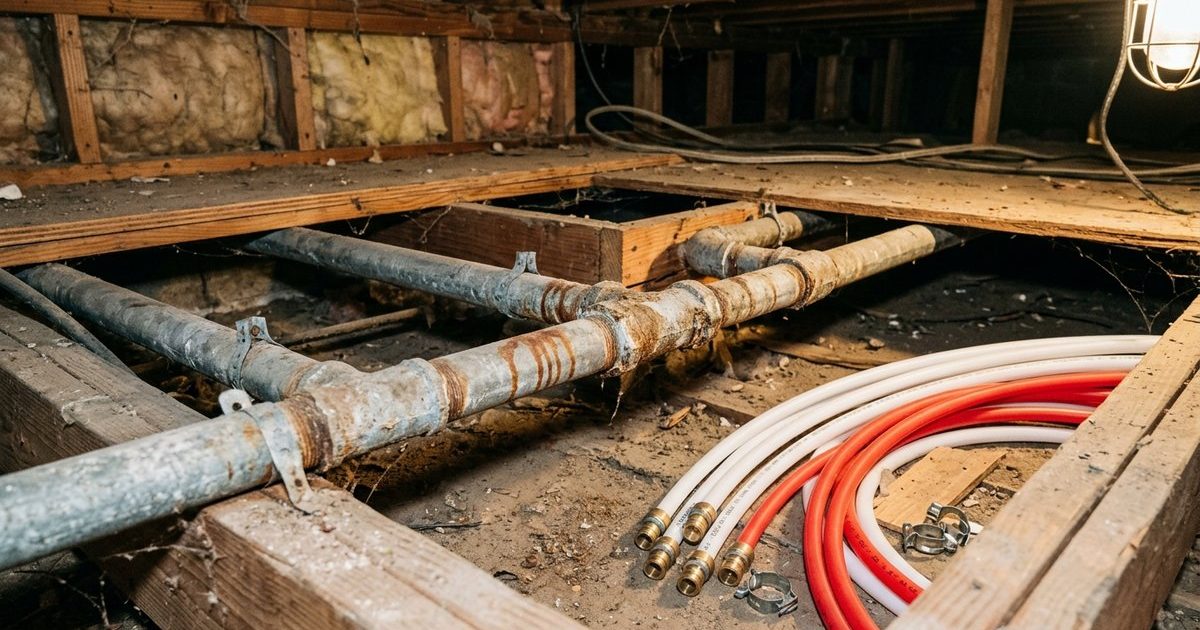
Minerals settle out of the heated water and collect at the base of the tank as sediment. That layer sits between the burner and the water it is meant to heat.
The burner then runs longer to reach the same temperature. It uses more gas, the tank cycles harder, and the steel is stressed by heat it was not meant to hold. Popping and rumbling noises are steam escaping through that sediment layer.
This is why we tell people that replacing a water heater without addressing the water often means replacing it early again.
The three treatment options, and what each one does
These get talked about as if they were interchangeable. They are not. They solve different problems, and buying the wrong one is a common and avoidable mistake.
Water softeners
A softener removes the calcium and magnesium that cause hardness, exchanging them for a very small amount of sodium. It treats the whole house.
This is the option that protects your plumbing and appliances, because it addresses the actual cause of scale. It needs a drain, a power outlet, and periodic salt.
Whole house filters
A carbon filter removes chlorine taste, odour, and some contaminants across the whole house. It does not remove hardness minerals.
If your complaint is that the water tastes of chlorine, this is what you want. If your complaint is scale, this on its own will not help.
Reverse osmosis
Reverse osmosis pushes water through a very fine membrane that strips out dissolved minerals and most contaminants. It is normally fitted under the kitchen sink and serves one tap.
It produces excellent drinking water. It is not a whole house solution, and it will do nothing for the scale in your heater.
Which combination suits which problem
- Scale and short appliance life: a softener
- Chlorine taste only: a whole house carbon filter
- Drinking water quality: reverse osmosis at the kitchen sink
- Grit or cloudiness, usually on a well: sediment filtration first
- All of the above: sediment, then softener, then reverse osmosis
That ordering matters on well water. Sediment filtration has to come first, because grit will foul everything downstream of it.
What softening changes, and what it does not
Being straight about this saves disappointment. A softener is a good investment here, but it is not magic.
What genuinely changes:
- Scale stops building on fixtures and inside the heater
- Soap lathers properly and you use less of it
- Glassware stops spotting
- Appliances last closer to their rated life
- Many people notice a difference in skin and hair
What does not change:
- Existing scale inside old pipes does not vanish overnight
- Taste is largely unaffected, since hardness is not what you taste
- Chlorine remains unless you add carbon filtration
- Sediment remains unless you add a sediment stage
The first point catches people out. In an older house with years of buildup, softened water slowly works on existing scale, but it is a gradual process rather than a reset.
Costs, running costs, and sizing
We do not publish system prices, because the right system depends on your water and your household. What we can set out is what drives the number.
| Factor | Why it matters |
|---|---|
| What is in your water | Hardness, sediment, and taste are separate |
| System type | Softener, carbon filter, or reverse osmosis |
| Household size | Capacity is sized to daily use |
| Install location | Needs drain, power, and space at the supply |
| Well or city supply | Wells usually need sediment filtration first |
Running costs are modest and worth knowing about. A softener needs salt, topped up every month or two. Filters need cartridge changes on a schedule. Reverse osmosis membranes are replaced every few years.
Why sizing matters more than brand
An undersized softener regenerates far more often than it should. That wastes salt, wastes water, and shortens the life of the unit. An oversized one costs more than it needed to.
Capacity is calculated from your water hardness and your household's daily water use. It takes a test and a short conversation, and it is the difference between a system that works quietly for fifteen years and one that annoys you.
Well water is a different problem
Properties in Acton, out past Castaic, and up the canyons east of Canyon Country often run on private wells. Well water has its own profile.
Sediment and iron come before hardness in the priority order. Sediment wears pump components and clogs fixtures. Iron stains basins and laundry a distinctive orange brown.
If you are on a well and losing pressure, or the pump is cycling constantly, that is a separate issue worth reading about under well pump services. Treat the mechanical fault first, then the water quality.
Does hard water affect your health?
This comes up constantly, so it is worth answering plainly. Hard water is not a health hazard. The calcium and magnesium in it are the same minerals people take as supplements, and drinking it does you no harm.
What people report is cosmetic rather than medical.
- Skin feeling dry or tight after a shower
- Hair that feels dull or heavy
- Eczema and similar conditions feeling more irritated
The mechanism is simple. Hard water reacts with soap instead of lathering, and the residue that forms is left behind on skin and hair rather than rinsing away cleanly. Softened water rinses properly, which is why the difference is often noticed within a week.
There is one point worth flagging for a small number of people. Softeners work by exchanging hardness minerals for a small amount of sodium. The quantity is far below what you would taste, and well below what is in ordinary food.
If you are on a strictly sodium restricted diet, a potassium based system is the alternative. It is worth raising with us before we quote.
What you can do this weekend without spending much
Not everything requires a system. These help regardless.
- Flush your water heater. Once a year, and it makes a real difference here.
- Descale shower heads. Soak them in white vinegar overnight.
- Turn the heater down to 120 degrees. Hotter water scales faster.
- Use a rinse aid in the dishwasher. It will not fix the cause, but it stops the spots.
- Get the water tested. You cannot choose a system without knowing what is in it.
That last one is genuinely the first step. Guessing at treatment is how people end up with a carbon filter when they needed a softener.
When to call a licensed plumber
Descaling fixtures and running a heater flush are homeowner jobs. So is changing a cartridge on an existing filter.
Call a licensed plumber for system installation. A softener needs to be plumbed into the main supply with a bypass, connected to a drain, and set up correctly for your water. Getting the drain connection wrong can create a cross connection risk, which is exactly the kind of mistake that fails an inspection.
Call sooner rather than later if you have already replaced two water heaters early, if you are seeing orange staining, or if the water has turned cloudy or gritty. Those point to something specific rather than general hardness.
Need a Plumber in Santa Clarita? BluePoint Plumbing Is Ready to Help
We test the water before recommending anything, so you buy the system your house actually needs rather than the largest one on the shelf. We serve Valencia, Saugus, Newhall, Canyon Country, Castaic, Stevenson Ranch, and Acton.
We hold California contractor licence 1140216 and we install softeners, whole house filters, and reverse osmosis systems.
Call us at (661) 235-5878 or contact us today to arrange water filtration in Santa Clarita and the surrounding areas.