

A tankless water heater is the better choice for a Santa Clarita household that keeps running out of hot water, wants floor space back and plans to stay in the home for years. A tank heater is the better choice when the budget is tight, the old tank has just failed, and a simple like-for-like swap gets hot water back fastest.
Both are good answers in the right house. The decision comes down to five things: how much hot water you use, what the install really costs, how long you will stay, how hard your water is, and what your gas line and venting can support.
How each one works
A tank heater keeps 40 to 50 gallons (sometimes more) hot all day and night. When you open a tap, it draws from that store. Once the store runs out, you wait while it reheats.
A tankless unit stores nothing. When you open a hot tap, a burner fires and heats the water as it passes through a heat exchanger. It never runs out of stored hot water, but it can only heat so many gallons per minute. Size it for two showers and run three plus the dishwasher, and the temperature drops.
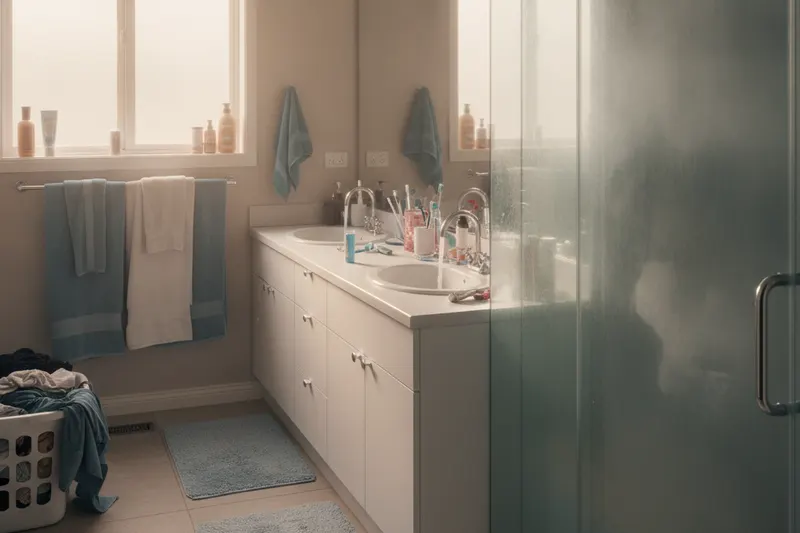
Hot water supply: who runs out, and who does not
If the last shower of the morning in your house is always cold, a tank is too small for the household. You can fix that with a bigger tank, if there is room, or with a tankless unit sized to your fixtures.
Tankless sizing is about flow, not volume. We count the fixtures that might run at once (showers, tubs, the washer, the dishwasher) and size the unit to that flow rate. A household that rarely runs more than one shower at a time needs a much smaller unit than a family of five with three bathrooms in Valencia or Stevenson Ranch.
Running cost and efficiency
A tank burns gas to keep its store hot whether anyone is using it or not. A tankless unit only fires when a hot tap is open, so it wastes less.
The U.S. Department of Energy puts numbers on it: for homes that use 41 gallons or less of hot water a day, on-demand water heaters can be 24% to 34% more energy efficient than conventional storage tank heaters, and 8% to 14% more efficient for homes that use a lot of hot water, around 86 gallons a day (DOE Energy Saver Guide, 2022).
That saving is real but modest on a monthly gas bill. On running cost alone, it rarely pays back the extra install cost quickly. Endless hot water and the space a tank takes up are usually the bigger reasons people convert.
Install cost: why tankless costs more
The heater is rarely where the extra money goes. Two things are:
- The gas line. A tank sips gas slowly. A tankless unit needs a large volume the moment a tap opens, and most lines sized for a tank are too small. The run from the meter often has to be upsized.
- The venting. Gas tankless units need their own vent, usually stainless or a concentric kit, routed outside. An outdoor-rated unit on an exterior wall can avoid most of that, which suits the valley climate. Acton properties need a freeze protection kit.
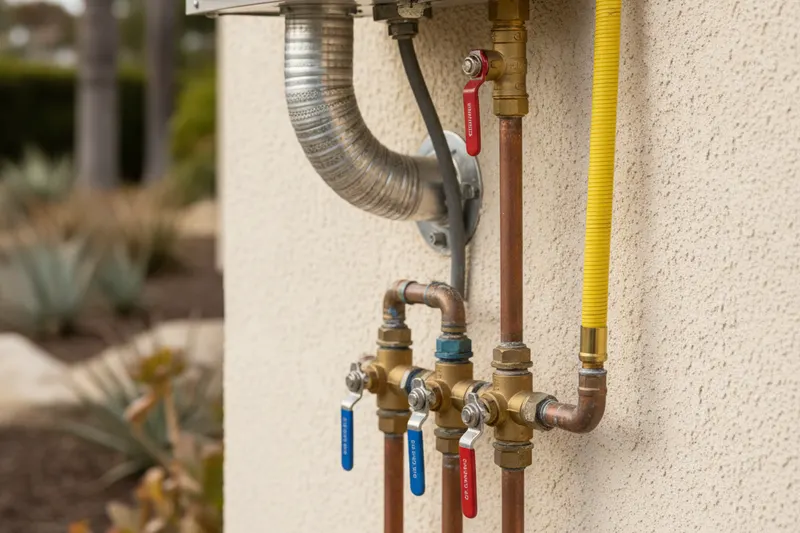
A like-for-like tank swap reuses the existing gas line, vent and location, so it is the cheaper job. A tank-to-tankless conversion usually adds the gas and vent work. That is why two tankless quotes can be far apart: ask each one whether the gas line upsizing and venting are included, and what size line the unit needs.
Either way, water heater work in Los Angeles County needs a permit, and the price should include it.
Lifespan, and what hard water does to both
The DOE guide puts most storage water heaters at 10 to 15 years, while tankless heaters can last more than 20 years. That longer life is one of the strongest arguments for tankless if you plan to stay in the home.
The catch in Santa Clarita is hard water. Scale builds inside a tank as sediment and shortens its life. In a tankless unit it coats the heat exchanger and slowly chokes the flow, so the unit needs descaling, usually once a year here. Skip it for a few years and a tankless unit can fail early. Our guide to flushing a tankless water heater explains how the service works and how often to do it.
A quick way to decide
Tankless usually makes sense when:
- The household runs out of hot water with a tank
- You want the garage floor space back
- You plan to stay long enough to benefit from the longer life
- Your old tank is due for replacement anyway, so you are paying for a heater either way
A tank usually makes sense when:
- The tank has failed and you need hot water back quickly at the lowest cost
- You may sell in the next few years
- The gas line and venting would need major work for tankless
- Hot water use is low and nobody runs out today
If your tank is showing its age, our guide to the signs you need a new water heater will help you judge how long you have to decide.
Talk it through with a local plumber
BluePoint Plumbing installs tankless water heaters and converts tank systems across the Santa Clarita Valley, and we check the gas line and venting before we quote, so the price covers the whole job. See our tankless water heater installation service in Santa Clarita, or compare it with a straight water heater replacement. If you would like a second opinion on a quote, get in touch.