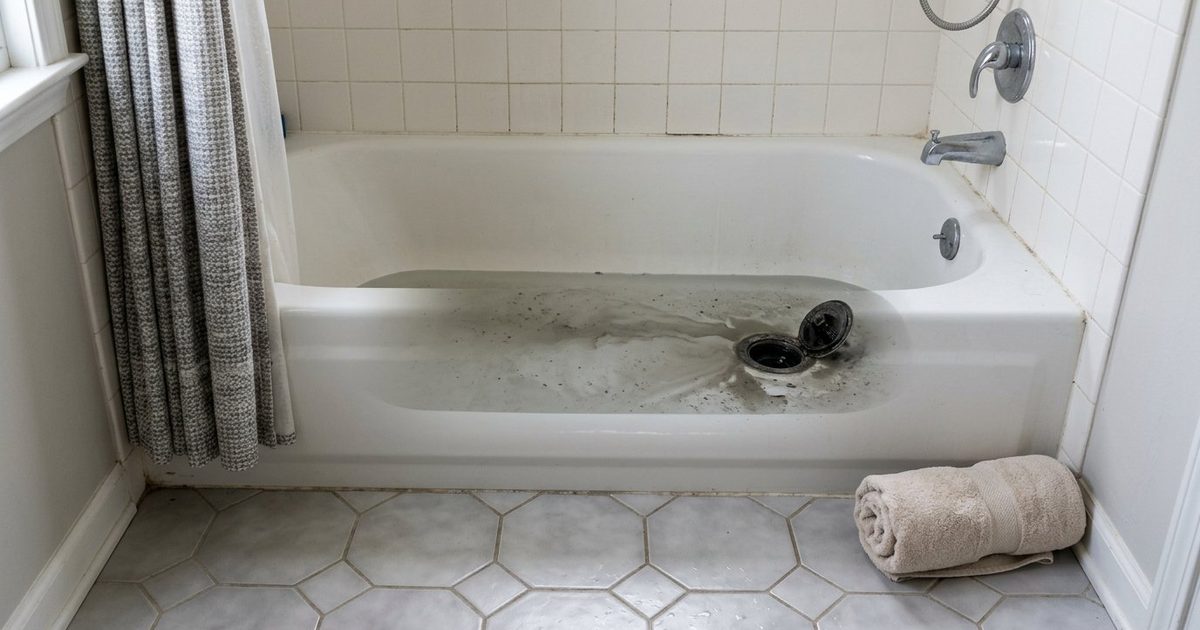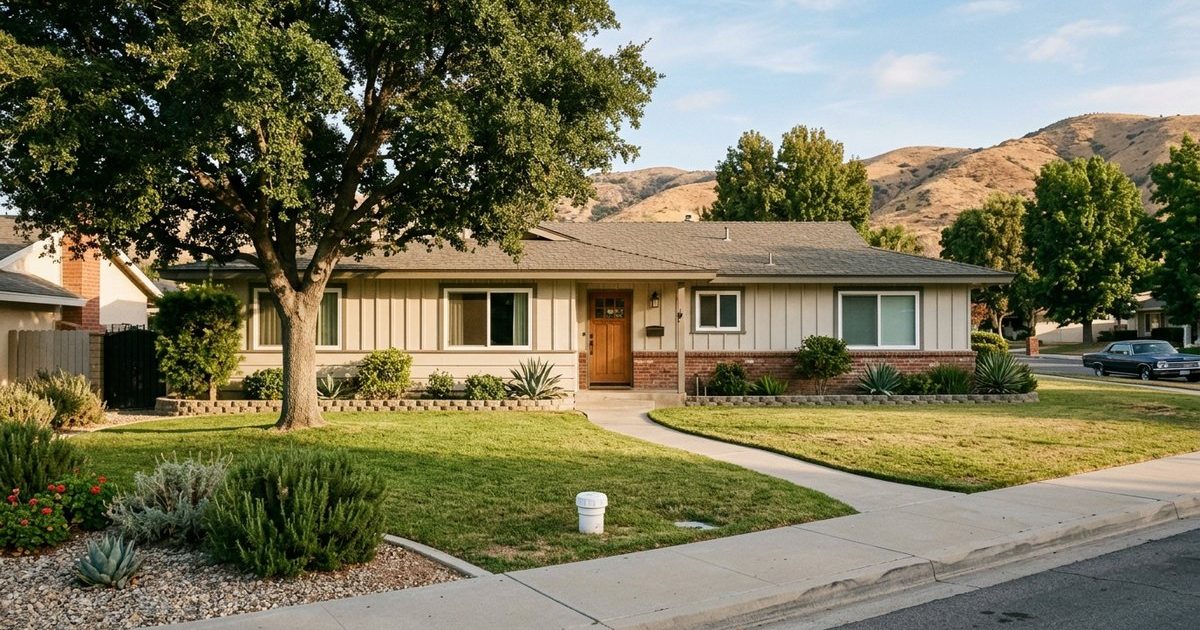

Tree roots in a sewer line can be cleared in a few hours, but they grow back, usually within months, unless the crack or joint they came through is repaired. Whether you clear, repair or replace depends on what a camera shows: a few roots at one joint in a sound pipe is a clearing and spot-repair job, while a cracked, root-filled clay or cast iron line usually needs trenchless repair or a new section.
The rest of this guide covers how to tell roots are the cause, what the camera inspection is looking for, the three options and what drives each one, and who is responsible for which part of the line.
How roots get into a sewer line
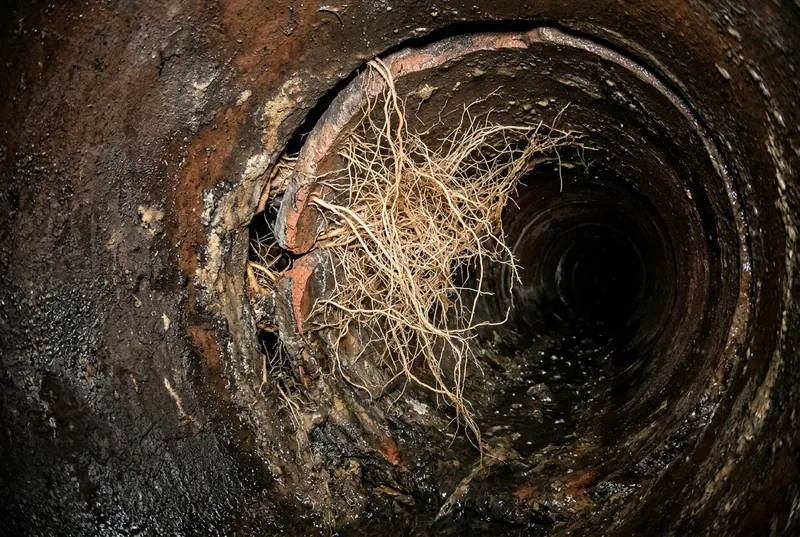
Roots do not break into a sound pipe. They find water. A hairline crack, a loose joint or a gap where two sections meet lets a little moisture escape into the soil, and fine roots grow towards it and in through the opening.
Once inside, they have water and nutrients, so they grow fast. The fine roots spread into a mat that catches toilet paper, grease and everything else passing through. Over time the mat fills the pipe, and the roots themselves thicken and widen the crack they came in through.
That is why older lines are where most root problems happen. In the Santa Clarita Valley, the older streets of Newhall and the homes along Sierra Highway still have clay and cast iron sewer laterals with many joints. Newer tracts in Valencia and Stevenson Ranch are mostly on plastic pipe with glued joints, which roots find much harder to get into.
Signs that roots are the problem
Root blockages build slowly, so the early signs are easy to miss:
- Drains that slow down across the house, not just one sink
- Gurgling from a toilet or tub when another fixture drains
- A blockage that comes back a few months after it was cleared
- Backups at the lowest drain, often a downstairs shower or a cleanout in the yard
- A patch of unusually green lawn or a damp spot along the line of the pipe
- Mature trees or large shrubs within reach of where the sewer runs
A clog that returns on a schedule is the strongest clue. If your line was snaked last spring and is backing up again now, something is growing back. Our guide to drains that keep clogging goes through the other common causes.
If sewage is already coming up into the house, stop using water and read our guide to sewage backing up into the house first.
What a camera inspection shows
Clearing the line without looking inside it tells you nothing about why it blocked. A camera inspection does. We run a camera through the lateral, from a cleanout or the house to the connection at the street, and you see the footage as we go.
What we are looking for:
- Where the roots are coming in. One joint, several joints, or along a crack
- How much of the pipe they fill. A few fine roots or a solid mass
- The condition of the pipe around them. A clean joint, a cracked section, or pipe that has broken apart
- Sags and offsets. Low spots that hold water and waste, which roots love
- Where the fault is, and how deep. The camera signal is traced from the surface and marked
The footage is what decides the right repair. Without it, every option is a guess. If you are buying a house with mature trees in the yard, our sewer camera inspection guide for home buyers explains why this is worth doing before you close.
Option 1: clear the roots
Clearing removes the roots inside the pipe and gets the line flowing again. A cable machine with a cutting head cuts through roots at the joints. Hydro jetting uses high-pressure water to scour the whole pipe wall clean, which removes the fine root mat and the grease caught in it. Our hydro jetting vs snaking guide compares the two.
Clearing is the right first step when:
- The line is blocked and needs to flow today
- The camera shows a few roots at one or two joints and the pipe is otherwise sound
- You want time to plan and budget for a repair
What clearing does not do is close the opening. The roots outside the pipe are still there and will grow back in. Clearing on its own is maintenance, not a fix.
Option 2: trenchless repair
Where the line is cracked or root damaged but still holds its shape, trenchless repair fixes it from the inside through one or two small access points, instead of digging a trench along the whole run. That seals the cracks and joints the roots were coming through.
Trenchless repair suits:
- Clay or cast iron pipe with root entry at several joints
- Lines that run under a driveway, patio or mature landscaping you want to keep
- Pipe that is cracked but has not collapsed or sagged badly
The line is cleared and inspected first, and the camera has to show the pipe is suitable. If the pipe has collapsed, separated, or has a deep sag, trenchless repair is not the right method.
Option 3: spot repair or replacement
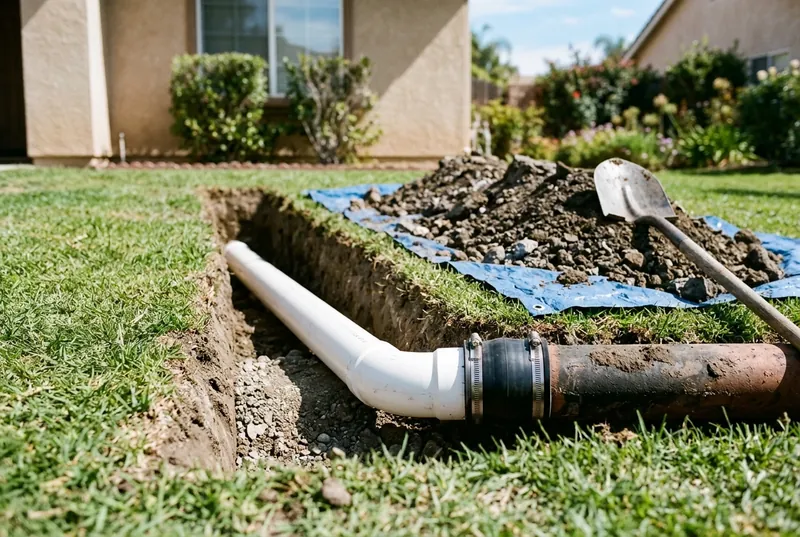
A spot repair digs down to one damaged section and replaces it. It makes sense when the camera shows one bad joint or one broken section and the rest of the line is sound.
Full replacement of the lateral is the answer when the line is failing along much of its length, has collapsed, or has a sag that keeps collecting waste. It is the biggest job of the three, but it ends the root problem for good when the new pipe is plastic with sealed joints.
What drives the price of either is mostly what sits above the pipe and how deep it is: a lawn is quick to dig and restore, a driveway or mature tree is not. Our sewer line repair cost guide goes through the factors in detail.
Which option fits your line
| What the camera shows | Usual answer |
|---|---|
| A few fine roots at one joint, pipe sound | Clear the roots, recheck in a year |
| Roots at several joints, pipe cracked but holding shape | Clear, then trenchless repair |
| One broken or badly offset section | Spot repair of that section |
| Collapsed pipe, deep sag or failure along the run | Replace the lateral |
Who is responsible for the roots?
In most cases, the homeowner. The sewer lateral, the pipe from your house to the public main, belongs to the property, and so do the roots growing into it.
Los Angeles County Public Works, which runs sewer maintenance districts across the county, states that "the private property owner is responsible for the entire length of the lateral," and that maintaining the lateral "includes keeping the lateral line flowing and free of debris such as roots or grease" (LA County Public Works, sewer maintenance customer information). The public main under the street is maintained by the district.
That holds even when the roots come from a street tree. If you think a parkway tree is involved, it is worth a call to the city or county before work starts. We can mark where your lateral runs and where the roots are coming in, which helps that conversation.
Keeping roots out after the repair
- Plant away from the line. Once you know where the lateral runs, keep new trees and large shrubs well clear of it.
- Get a camera check before planting near the line, or before buying a house with mature trees.
- If you only clear the roots, recheck the line with a camera on a regular schedule rather than waiting for the next backup.
- Do not rely on root-killing products as a fix. They do nothing about the crack, so the roots return.
Book a camera inspection with BluePoint
If your drains keep slowing down and there are trees near the line, call BluePoint Plumbing. We camera the line first and show you the footage, then quote the repair against what it shows: clearing, trenchless repair or replacement. We file the permit and meet the inspector when the work needs one. A real person picks up, Monday to Saturday, 6 AM to 5 PM. See our sewer line repair service in Santa Clarita, our drain cleaning service, or contact us to book.