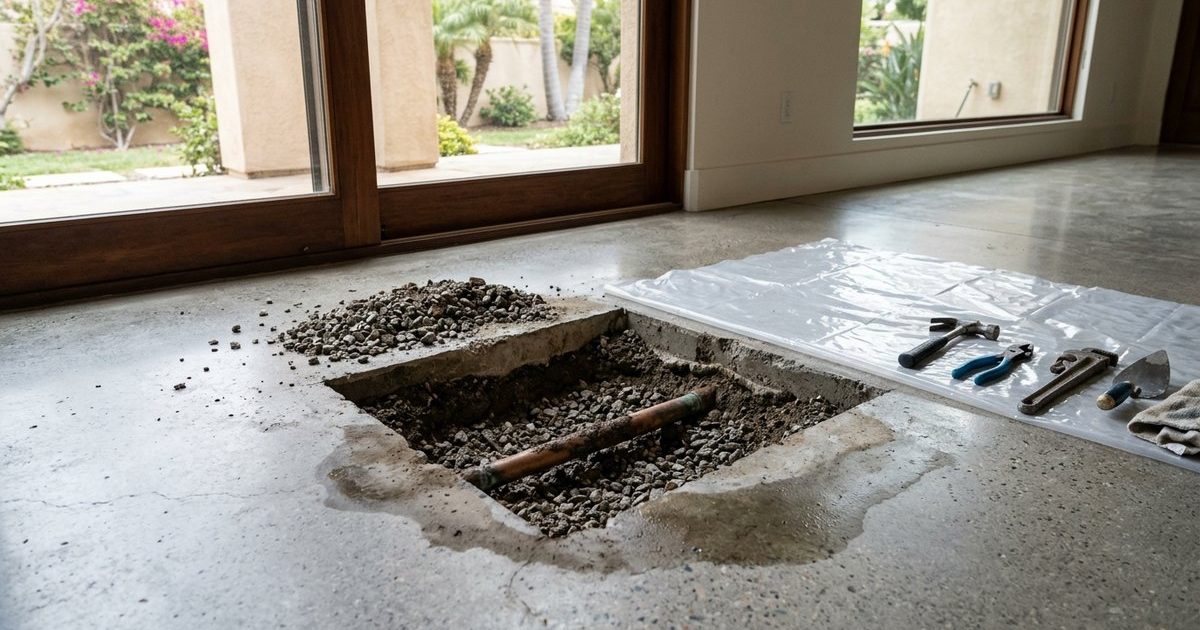

A gas line to an outdoor kitchen, fire pit or patio heater is a new branch off your home's gas piping, sized for every appliance on the system, run underground to the back yard, pressure tested, and inspected before it is covered. Most of the planning is in two questions: can your existing supply carry the extra load, and where will the line run.
Back yard projects are a big part of the gas work we do around Valencia, Stevenson Ranch, Saugus and Castaic. Here is what the job involves, what drives the price, and what to sort out before the landscaper or the island builder starts.
What needs a gas line in the back yard
Outdoor gas appliances that usually get a hard line rather than a propane bottle:
- Built-in grills in an island or outdoor kitchen
- Side burners, pizza ovens and griddles built into the same island
- Fire pits and fire tables
- Patio heaters mounted to a wall or a post
- Pool and spa heaters, which usually burn more gas than anything else on this list
Running natural gas instead of propane means no bottles to swap and no running out halfway through a cookout. It also means the line has to be planned properly, because it is permanent and buried.
Step 1: Size the line for the whole house
This is the step that gets missed. Your gas meter and the pipe leaving it were sized for what the house had when it was built: usually a furnace, a water heater, a range and a dryer. Every appliance you add draws from the same supply.
To size the new line, we add up the gas each appliance burns at full output, including everything already in the house, and work out the pipe size needed over the length of the run. A long run to the far end of a yard needs a bigger pipe than a short one for the same grill.
Two things can change the answer:
- A tankless water heater. Tankless units burn far more gas at full output than a tank heater. If the house already has one, or you are planning one, the outdoor kitchen has to fit around it. Our tankless water heater installation page explains why.
- A pool or spa heater. If one is planned for later, size the trench and pipe for it now. Digging the yard twice costs more than a slightly bigger pipe once.
If the existing supply cannot carry the new load, the fix is usually a larger line from the meter, and in some cases a meter upgrade from the gas company. We tell you which before quoting.
Step 2: Plan the route
Most outdoor lines leave the house piping near the meter, drop underground, and run across the yard to the island or fire pit.
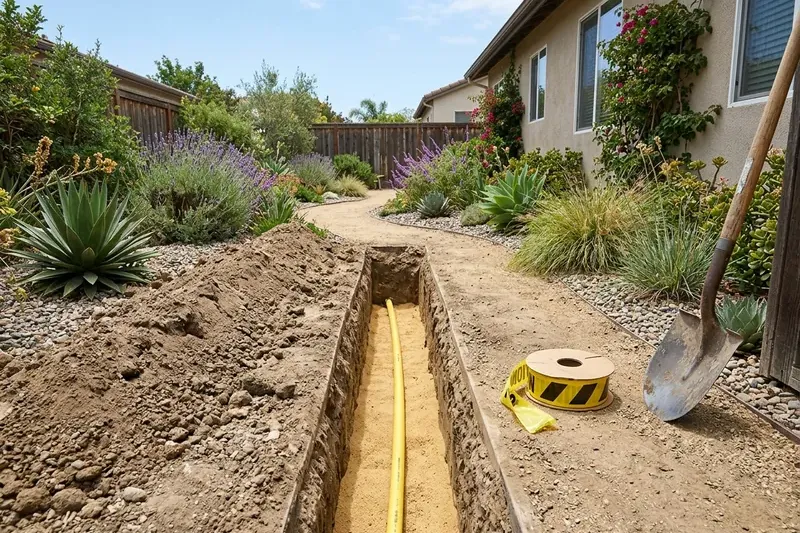
When we plan the route, we look at:
- Where it leaves the house. Usually close to the meter, through a new tee and shut-off valve.
- What it has to cross. Irrigation lines, low voltage lighting, the sewer lateral and the water line all share the same yard. The route avoids them where it can.
- Hardscape. Running the line before pavers, concrete or the island go in is far cheaper than cutting through them afterwards.
- A shut-off at the appliance. Each outdoor appliance gets its own valve so it can be serviced without shutting off the house.
Before anyone digs, the public utility lines have to be marked. The national 811 service describes itself as "the free national before-you-dig service" and asks you to contact it "a few business days before you begin any digging" (811 Before You Dig). Your own private lines, such as irrigation and garden lighting, are not utility lines, so plan on locating those with whoever installed them, or by digging carefully by hand near them.
Step 3: Install, pressure test and inspect
The line goes in at the depth the code calls for, on clean bedding, with a tracer wire and warning tape above it so the next person digging knows it is there. Above ground, the pipe connects to a shut-off valve and a stub at the island or fire pit, ready for the appliance.
Then the line is pressure tested. We cap it, put it under test pressure on a gauge, and leave it. A line that holds pressure has no leaks. A line that drops gets found and fixed before anything is covered.
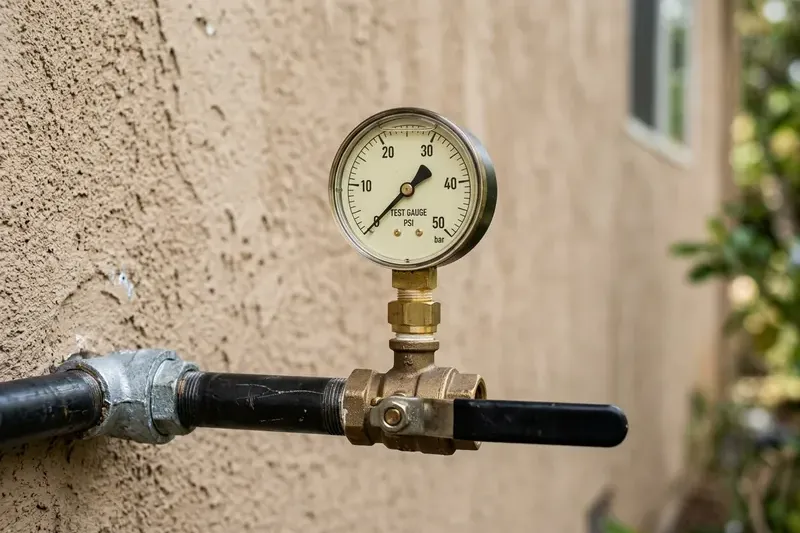
New gas lines need a permit and an inspection. We file the permit and meet the inspector, who checks the pipe, the fittings, the depth and the test gauge. The trench is backfilled only after it passes. Once it does, the gas is turned on and the appliances are connected and lit.
How long it takes
| Job | Typical time |
|---|---|
| Hookup where a line already exists | 1 to 2 hours |
| New buried line to an island or fire pit | 1 to 2 days, plus inspection |
| Line upgrade from the meter | Depends on the run; quoted after sizing |
Inspection timing depends on the city or county schedule, so we book it as soon as the line is ready.
What drives the price
Every back yard is different, so we price by the job rather than by the foot. The things that move the number:
- Length of the run from the house piping to the appliance.
- Pipe size, which depends on everything else on the gas system.
- What the trench has to cross. Lawn and planting beds are quick. Concrete, pavers and tree roots are slower.
- Number of outdoor appliances and shut-off valves.
- Whether the supply needs upgrading to carry the extra load.
- The permit and inspection, which are part of every new line.
You get a written price that includes the permit, the pipe run, the testing and the connections before any work starts.
Plan it with your outdoor kitchen builder
The smoothest outdoor kitchen jobs are the ones where the gas line is planned before the island goes up. A few tips:
- Get the appliance specs early. We need the gas rating of each grill, burner and fire feature to size the line.
- Run the line first, then build. The stub should come up inside the island before the countertop goes on.
- Leave access. The shut-off valve for each appliance should be reachable through a cabinet door, not sealed behind stone.
- Think about later. If a pool heater or a second fire feature is likely, tell us now.
If you smell gas
If you ever smell gas, the rotten egg smell added to natural gas, leave the house or the yard straight away. Do not switch lights or appliances on or off, and do not use a phone near the smell. Once you are away from it, call the gas company or 911. Call a plumber for the repair once the area is safe.
Get a gas line quote in Santa Clarita
Planning an outdoor kitchen, a fire pit or a pool heater? Tell us what you are connecting and where it is going, and we will size the line, give you a written price, file the permit and meet the inspector. BluePoint Plumbing is open Monday to Saturday, 6 AM to 5 PM across the Santa Clarita Valley. See our gas line repair and installation service or contact us to book.