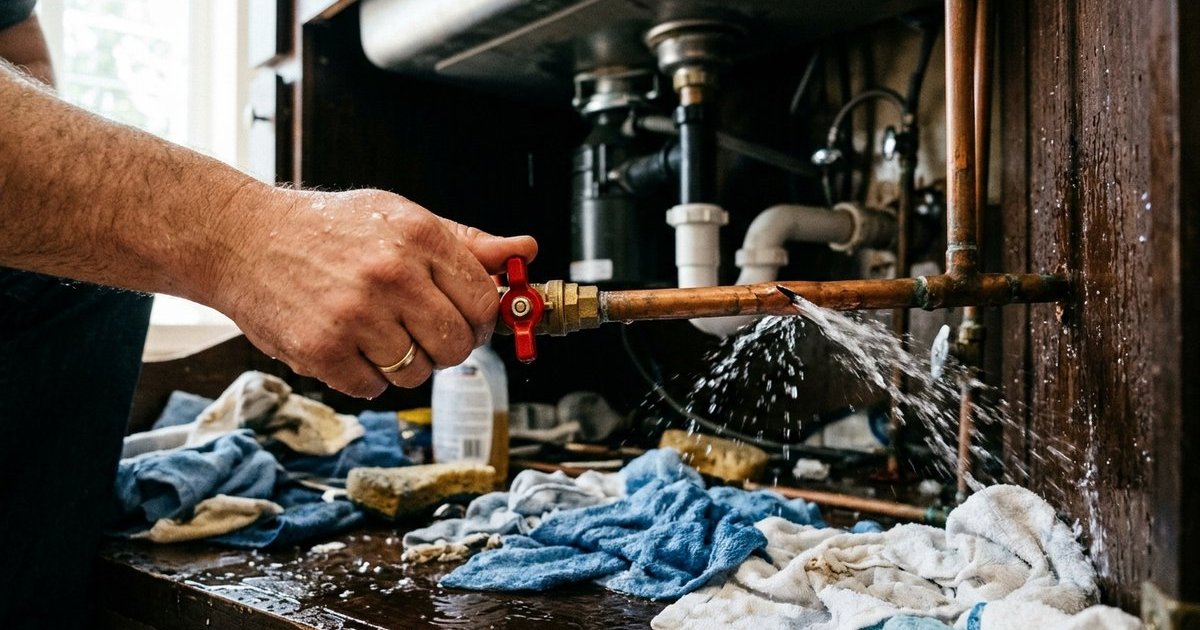

A slab leak can be fixed in one of two ways: open the floor and repair the pipe at the leak, or leave the slab alone and reroute that line through the walls or attic. A spot repair suits one leak in pipe that is otherwise sound; a reroute is usually the better money once the pipe has leaked before or is worn along its length.
Most houses in Valencia, Saugus, Canyon Country and Stevenson Ranch sit on concrete slabs with copper supply lines underneath, so this is a decision a lot of valley homeowners end up making. Here is how to confirm the leak, what each repair involves, and how to pick.
Signs you have a slab leak
A slab leak rarely shows itself as water on the floor. It shows up sideways:
- The water bill jumps and nobody is using more water.
- A warm patch on the floor, often in a hallway, kitchen or bathroom. Hot water lines leak under slabs more often than cold ones, and you feel the heat through tile or wood.
- The sound of running water with every tap and appliance off.
- The water heater runs all the time, because a hot side leak keeps it refilling and reheating.
- Damp carpet, lifting flooring, or a musty smell along a wall where nothing has spilled.
- Low water pressure at one end of the house.
Any one of these is worth checking. Two together usually means a leak somewhere under the house.
Confirm it is a leak first: the meter test
Before anyone spends money looking, prove there is a leak. It takes ten minutes.
- Turn off every tap, the dishwasher, the washing machine and the irrigation timer. Make sure no toilet is refilling.
- Find your water meter. In most valley neighbourhoods it sits in a concrete box near the curb.
- Lift the lid and watch the dial. Most meters have a small triangle or star that spins when any water is flowing.
- If it moves with everything off, water is escaping somewhere.
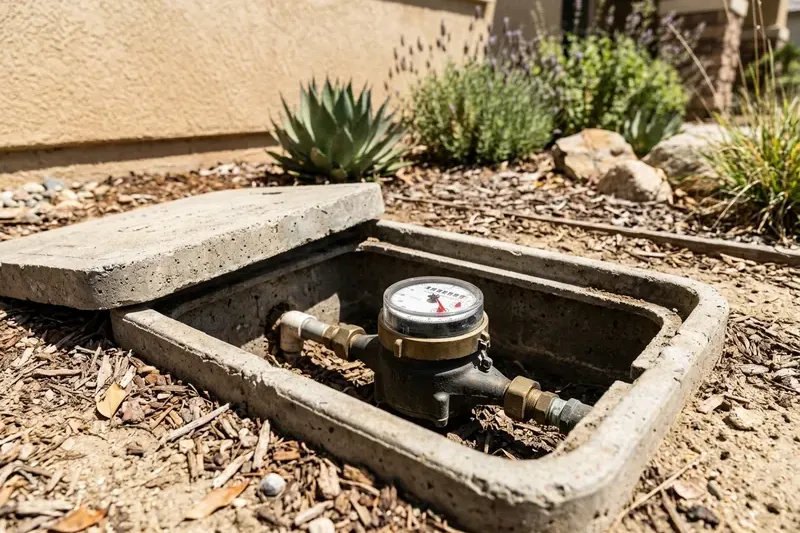
A moving meter does not tell you where the leak is. It could be a toilet flapper, an irrigation valve or the line between the meter and the house. That is the next step.
Small leaks add up. The U.S. Environmental Protection Agency says the average household's leaks "can account for more than 9,300 gallons of water wasted every year," and that nine percent of homes have leaks wasting 50 gallons or more a day (EPA WaterSense, Fix a Leak Week). A slab leak on a hot line wastes the energy used to heat that water too.
How we find where the leak is
Leak detection is about narrowing it down before anything is opened. We start at the meter with the house shut off, then isolate parts of the system to work out whether the leak is on the hot side or the cold side, inside the house or outside, in a wall or under the slab.
Once we know it is under the slab and on which line, we trace it to a spot. The aim is to open the smallest area possible, or to avoid opening the floor at all if a reroute is the better repair.
On our leak detection service we tell you the cost of tracing the leak before we start, then give you a written price for the repair once we know where it is.
Option 1: Spot repair through the slab
A spot repair means cutting a small opening in the floor directly over the leak, digging down to the pipe, replacing the damaged section, testing it, and closing the slab back up.
When it makes sense:
- It is the first leak the house has had.
- The pipe around the leak looks sound when it is exposed.
- The leak is somewhere you can reach without lifting a lot of flooring, such as a garage, laundry or tiled area.
What to expect:
- Flooring over the spot has to come up. Tile and carpet are easier to patch than long runs of wood or luxury vinyl plank.
- The work itself is usually one to two days, including closing the slab.
- The rest of the pipe under the slab is the same age as the part that failed. A spot repair fixes this leak, not the next one.
Option 2: Reroute the line through the walls or attic
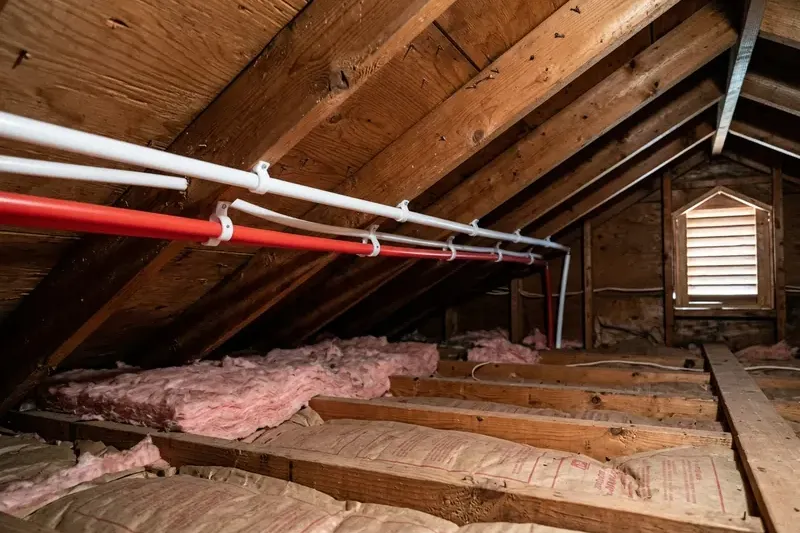
A reroute abandons the leaking line under the slab and runs a new line to the same fixtures overhead, through the attic and down inside the walls. Most reroutes in the valley are done in PEX, which bends around framing and needs fewer fittings. If you are weighing materials, our PEX vs copper repipe guide covers the trade-offs.
When it makes sense:
- The house has had a slab leak before, on the same line or another.
- The leak is under finished flooring that would be costly to lift and match.
- Exposed pipe shows pinholes, green staining or thin walls, which point to wear along its length.
- The leak is in a spot that is hard to open, such as under a kitchen island or a shower.
What to expect:
- Small openings in drywall where the new line drops to each fixture, patched afterwards.
- The water is off for part of the job, not for days.
- Once the new line is in, that leak cannot recur under the slab, because nothing is running there.
Repair or reroute: how to choose
| Spot repair | Reroute | |
|---|---|---|
| Suits | One leak, sound pipe | Repeat leaks, worn pipe, hard-to-reach spot |
| Floor opened | Yes, over the leak | No |
| Walls opened | No | Small openings, patched |
| Future leaks on that line | Still possible | Not under the slab |
| Typical time | 1 to 2 days | 1 to 2 days for one line |
The price depends on where the leak is, how far the new line has to run, the flooring involved and any water damage that needs drying. We explain both options on site and give you a written price for each before anything comes apart, so you choose with the numbers in front of you.
If the house has had two or three slab leaks already, the honest answer is often a wider repipe rather than another single repair. Our repiping service page explains what that involves, and our galvanized pipe guide covers older homes with steel supply lines.
What to do while you wait for the repair
- If you can hear water or see the meter spinning fast, shut the main valve when nobody needs water, and open it only when you need to.
- If it is the hot line, turning off the cold supply to the water heater stops it refilling into the leak. Turn the heater to vacation or pilot so it does not heat an empty tank.
- Photograph any damage to floors, baseboards and walls, and keep your recent water bills. Many policies treat the water damage and the pipe repair differently, so it helps to have a record before you call your insurer.
- Do not wait on a warm floor. Hot water under a slab keeps the ground wet and feeds mould under flooring.
Slab leaks in the Santa Clarita Valley
Slab leaks are common here for a few reasons. Many tracts in Valencia, Saugus and Canyon Country were built on slabs with copper running underneath, and a lot of that pipe is now decades old. The valley's hard water and the ground movement we get both wear on pipe that cannot be seen or reached. A home that has had one slab leak is more likely to have another.
That is why we look at the condition of the pipe, not just the leak, before recommending a repair.
Talk to us about a slab leak
If your meter moves with everything off, or you have a warm spot on the floor, call BluePoint Plumbing. We confirm the leak, find where it is, and give you a written price for a spot repair or a reroute before any work starts. Doug runs the job, and we are open Monday to Saturday, 6 AM to 5 PM. See our leak detection service in Santa Clarita or contact us to book.