
If your Santa Clarita home has an old salt water softener, the usual answer is to take it out and replace it with a salt-free system plumbed into the same spot on the main supply. Softeners that flush salty brine into the drain are not allowed on the Santa Clarita Valley Sanitation District sewer, and most of the ones still sitting in valley garages stopped doing their job years ago anyway.
Here is how to tell what you have, what the swap involves, what a salt-free system will and will not do compared with the old unit, and what affects the price.
Why salt softeners are a problem in the Santa Clarita Valley
A traditional softener swaps the calcium and magnesium in your water for sodium. Every few days it cleans itself by flushing a strong salt solution, called brine, down the drain. In most places that brine is someone else's problem. Here it is not.
Wastewater from homes on the local sewer is treated and released into the Santa Clara River, and the salt from softeners passes straight through treatment. That chloride is what the river limits are about, and it is why the valley has rules on softeners that most of Los Angeles County does not.
State law spells out the power behind those rules. California Health and Safety Code section 116787 allows the Santa Clarita Valley Sanitation District, through a voter-approved ordinance, to "require the removal of all installed residential self-regenerating water softeners", which the law defines as appliances "that discharge brine into the community sewer system" (California Health and Safety Code, section 116787).
So if your softener uses salt and drains into the sewer, it should not be running. That is why we install salt-free softeners only.
How to tell what kind of softener you have
Most salt softeners in the valley are in the garage, next to the water heater or where the main line comes into the house. Look for these:
- A second, shorter tank next to the main tank, usually with a lid on top. That is the brine tank, and it holds salt.
- Salt bags on a shelf nearby, or a crust of white salt inside that tank.
- A small drain hose running from the control head on top of the unit to a floor drain, a standpipe or the washer drain. That hose carries the brine away.
- A timer or control dial on top that sets when the unit regenerates, often in the middle of the night.
If you have a single tank with no brine tank, no salt and no drain hose, you may already have a salt-free unit or a filter. If you are not sure, take a photo of the setup and the label on the control head. We can usually tell from that.
Signs the old softener has already quit
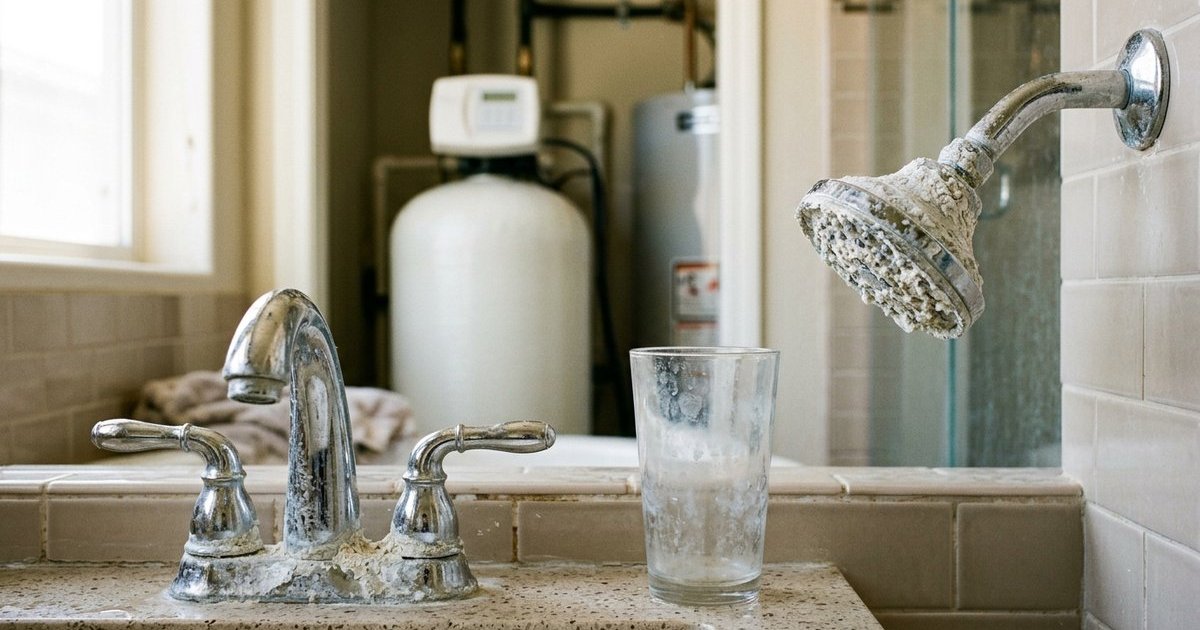
Many of the salt softeners we find were installed decades ago and have not worked properly for a long time. The common signs:
- The salt level never drops. If nobody has added salt in a year and the tank looks the same, the unit is not regenerating.
- The bypass valve is turned to bypass. A previous owner may have switched it off rather than remove it. Water then goes straight past the unit, untreated.
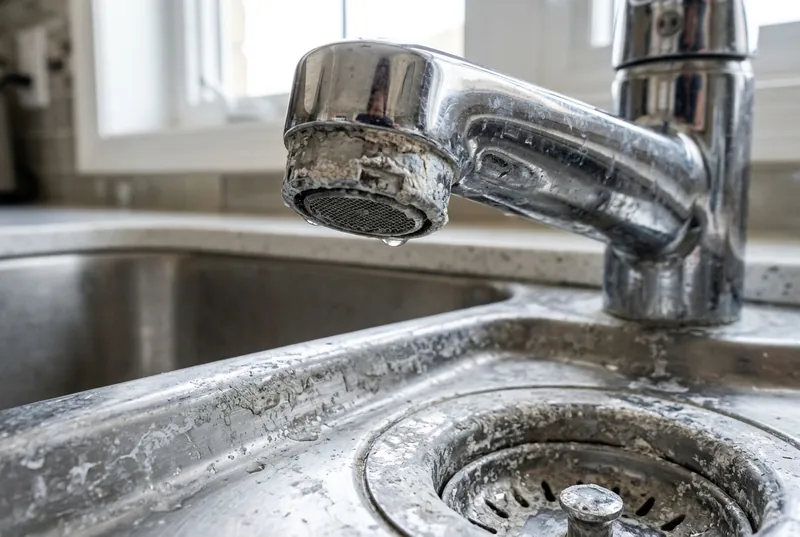
- Scale is back on taps, shower glass and the dishwasher, even though there is a softener in the garage.
- The control head is dead or blinking, or the clock is hours wrong after a power cut.
- Leaks or rust around the tank base or the valve fittings.
A dead softener left on the line is not harmless. Old valves and fittings leak, and a unit stuck partway through a cycle can leave you with low pressure or salty water at the tap.
What replacing it with a salt-free system involves
Swapping a salt softener for a salt-free system is usually a half-day job in the same location. The steps:
- We test your water. Hardness, sediment and taste are separate problems with separate fixes, so we find out which ones you have before recommending anything.
- We remove the old unit and brine tank and haul them away.
- We cap or remove the drain connection, since a salt-free system does not need one.
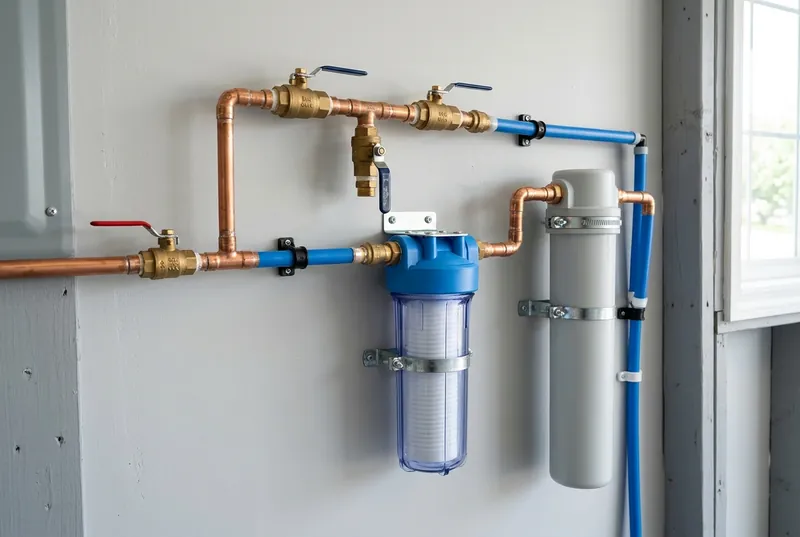
- We re-plumb the loop where the main supply enters the house, with a bypass so the system can be serviced without shutting off water to the whole home.
- We install the salt-free softener, and a whole house sediment or carbon filter ahead of it if your water needs one.
- We check pressure and flow at the fixtures and show you how the bypass and any filter changes work.
If the old loop is corroded galvanized pipe or tired copper, we tell you before we start and price that section separately. It is common in older Newhall and Canyon Country homes.
Salt-free versus the old salt softener: what changes
Being straight about this up front saves disappointment later.
What a salt-free softener does well. It changes the hardness minerals so they stay in the water instead of sticking to pipes, fixtures and the inside of your water heater as scale. Less scale means water heaters, tankless units, dishwashers and washing machines last longer and work closer to how they should. There is no salt to buy, no brine going down the drain and no drain line needed.
What it does not do. A salt softener removes the minerals. A salt-free system leaves them in. So the "slippery" feel some people remember from a salt softener does not come back, and you may still see some spotting where water dries on glass. Most people are happy with the trade once the scale on fixtures and in the heater stops building up.
Drinking water is a separate choice. If taste is the complaint, an under sink reverse osmosis system at the kitchen tap is the usual answer. It works alongside the whole house system.
Our guide to hard water in Santa Clarita goes deeper on what hardness does to a home and how the three types of treatment compare.
What affects the price of the job
We do not quote softener replacements over the phone, because the price depends on what we find. The main factors are:
- The system you need. A salt-free softener on its own is a smaller job than a softener with whole house filtration ahead of it.
- Household size and water use. The system is sized so it keeps up when everyone is showering at once.
- The state of the existing loop. Clean copper with good shutoffs is quick to tie into. Rusted galvanized or a missing bypass adds work.
- Where the old unit sits. An open garage wall is straightforward. A cramped closet or an outdoor install needs more planning.
- City water or a well. Properties on private wells in Acton, Castaic and Sand Canyon usually need sediment filtration first, and sometimes iron treatment, before any softening.
- Ongoing costs. No salt. Filter cartridges and the softener's treatment media are replaced on a schedule, which we explain before you decide.
You get a written price before anything comes apart.
Softeners and your water heater
The biggest money reason to treat hard water here is the water heater. Scale settles in the bottom of a tank heater and coats the heat exchanger in a tankless unit. Either way the heater works harder and wears out sooner.
If your heater is near the end of its life, it often makes sense to plan the softener and the heater together, so the new heater starts on treated water from day one. Our water heater installation page covers the replacement side.
Questions we get about old softeners
Can I just leave the old softener in bypass? You can for a while, but it is still on your plumbing with old valves and fittings that can leak. Removing it and putting in a system that works makes more sense than paying for neither.
Can I convert my salt softener to salt-free? Not really. They work in different ways. The tank and valve from a salt unit are not reused. The plumbing loop and location usually are.
Do I need a drain for a salt-free softener? No. That is one of the reasons it fits valley homes so well.
What about a softener at a rental property? The same rule on brine applies. Landlords with an old salt unit should have it replaced the same way.
Replace your salt softener with BluePoint Plumbing
If you have an old salt softener in the garage, or you are not sure whether the one you have is allowed, call BluePoint Plumbing. We test your water, take out the old unit, and install a salt-free system sized to your house, with a written price before anything comes apart. A real person picks up, Monday to Saturday, 6 AM to 5 PM. See our water filtration and softener service in Santa Clarita or contact us to book.