
The right plumber for a Santa Clarita restaurant is one who knows commercial kitchen drains and grease, can size hot water for your busiest hour, and will schedule the work before you open so you do not lose a service. Check their California contractor licence, ask how they handle a backed-up floor drain, and get every price in writing before work starts.
A restaurant is harder on its plumbing than any house. The drains carry more grease, the water heater runs flat out at lunch and dinner, and a single failed restroom or backed-up floor drain can stop you trading. So the plumber you call matters more than it does at home. Below is what to look for, the jobs that come up most in food premises, and the questions worth asking before you hire anyone.
What makes restaurant plumbing different
Three things set a commercial kitchen apart from a home kitchen.
Grease volume. A home kitchen sends a little grease down the sink. A restaurant sends it down every sink, every floor drain and every dishwasher, all day. Grease goes down warm as a liquid, then cools and sets on the pipe wall. Over weeks it narrows the line until it closes off, usually at the worst possible time.
Demand at peak. A house uses hot water in short bursts. A restaurant needs hot water for the dish pit, the hand sinks and the prep sinks all at once, right in the middle of service. A water heater that keeps up at 3 PM can fall behind at 7 PM.
The cost of downtime. When a home toilet fails, the family uses the other bathroom. When a restaurant restroom or floor drain fails, you may have to stop seating people. That is why the timing of the work matters as much as the work itself.
Grease and floor drains: the problem behind most calls
Grease is the most common cause of reported sewer blockages. The U.S. Environmental Protection Agency reports that grease from restaurants, homes and industrial sources is "the most common cause (47%) of reported blockages", because it "solidifies, reduces conveyance capacity, and blocks flow" (EPA, Controlling Fats, Oils, and Grease Discharges from Food Service Establishments).
In a restaurant it usually shows up in this order:
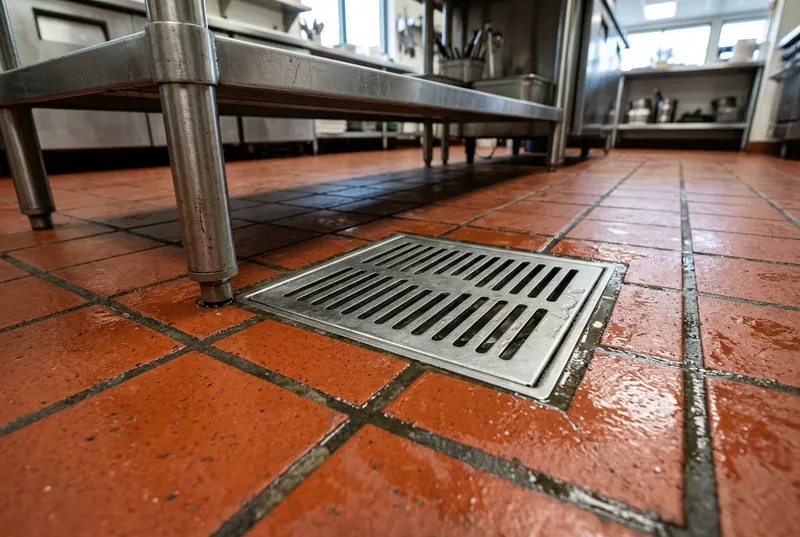
- Floor drains slow down. Water sits around the dish pit or the prep area for longer after mopping.
- Smells come back up the drains, especially first thing in the morning.
- Sinks gurgle when the dishwasher empties.
- A floor drain backs up during service. By this point the line is badly narrowed.
The fix depends on where the grease has built up. A short blockage near a sink can be cleared with a cable. Grease that coats a long run of pipe needs hydro jetting, which scours the pipe wall clean rather than punching a hole through the middle. If the same line keeps blocking, a camera inspection shows whether it is grease, a sag in the pipe or damage, so the repair matches the cause.
The grease trap or interceptor matters here too. The EPA notes that grease devices "must be designed and sized appropriately" and serviced "at regular intervals", and that how often depends on the kitchen. A trap that is overdue for pumping lets grease straight through to the line downstream. Pumping is usually done by a grease hauler on a schedule. A plumber's job is the lines either side of it and the drains that feed it, and a good one will tell you when the trap, not the pipe, is the real problem.
Hot water that keeps up at peak service
Hot water complaints in restaurants almost always happen during the rush, and the cause is usually one of two things:
- The heater is undersized for real demand. It was sized for what the space needed years ago, or for a different kind of business before you moved in.
- Scale has cut its recovery rate. Water across the Santa Clarita Valley is hard. Scale settles in the tank and insulates the burner, so the heater takes longer to recover between demands.
Commercial water heaters are sized against peak use, not floor area. A good plumber asks what runs at the same time during your busiest hour: the dishwasher, how many hand sinks, the prep sinks, a mop sink. Then they size the heater, or a pair of heaters, against that. If the scale is the issue, flushing the tank or adding water filtration can help an existing heater before you replace it.
Restrooms: the fixtures that work hardest
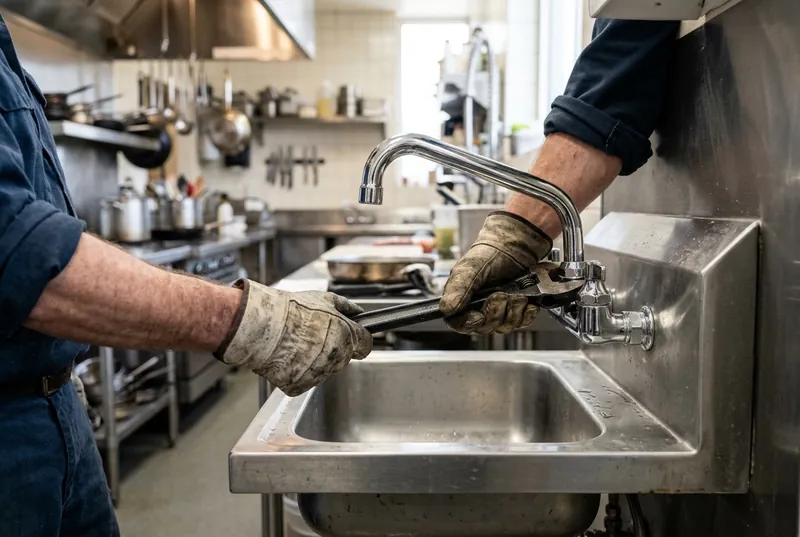
Restaurant restrooms get far more use than a home bathroom, and customers notice when one is out of order. The faults we see most are:
- Running or weak-flushing toilets, usually a worn flush valve or fill valve.
- Leaking or dripping faucets and loose handles from constant use.
- Clogged toilets, often from paper towels or wipes.
- Slow hand sink drains from soap and hair.
Most of these are short repairs. Commercial-grade parts cost more than home parts but last far longer under heavy use, so ask whether the replacement part is rated for commercial use.
What to check before you hire a restaurant plumber
Use these questions to sort a good fit from a bad one:
- Do they hold a California contractor licence? You can look up any licence number on the Contractors State License Board website. BluePoint's is 1140216.
- Can they work before you open? Ask what time they start and whether they work Saturdays. The best time to fix a kitchen drain is before the first ticket, not during service.
- Will they quote in writing? Many restaurants have an owner, a landlord or a head office who signs off the spend. A written price makes that simple.
- Do they camera repeat blockages? A plumber who clears the same drain every month without finding out why is selling you the same job again and again.
- Do they handle permits? A new prep sink, a water heater replacement or a fit out often needs a permit and an inspection. Ask whether they file it and meet the inspector.
- Do they understand who pays for what? In a leased unit, responsibility for a failed line can sit with the tenant or the landlord. A plumber who documents the work clearly makes that conversation easier.
Plan the work before it fails
The cheapest plumbing job in a restaurant is the one booked ahead. A few habits prevent most emergencies:
- Keep grease out of the sinks. Scrape plates into the bin and collect fryer oil for recycling.
- Keep the grease trap on a regular pumping schedule, set by how busy the kitchen is. Slow floor drains mean it is overdue.
- Book drain cleaning on a schedule if the same lines keep slowing down, rather than waiting for a backup.
- Flush the water heater to control scale, and have its size checked if hot water keeps running short at peak.
- Fix small leaks early. A dripping faucet or a leaking valve in a service void can damage a ceiling or a neighbour's unit before you notice it.
Restaurants along the main corridors in Valencia, Newhall and Canyon Country tend to run into the same problems, because most of the buildings are of similar age and use. If your premises is a former retail unit converted to food, the drains may never have been sized for a commercial kitchen, which is worth checking early. For a wider checklist that covers offices, salons and shops as well as food premises, see our small business plumbing checklist.
Book commercial plumbing with BluePoint
BluePoint Plumbing works with restaurants, cafes and other small commercial premises across the Santa Clarita Valley. We start at 6 AM Monday to Saturday, so most kitchen and restroom jobs can be done before you open, and you get a written price before anything comes apart. When a job needs a permit, we file it and meet the inspector. During our hours, a backed-up floor drain or a failed restroom moves to the front of the schedule. See our commercial plumbing service in Santa Clarita, our drain cleaning service, or contact us and tell us your opening hours.