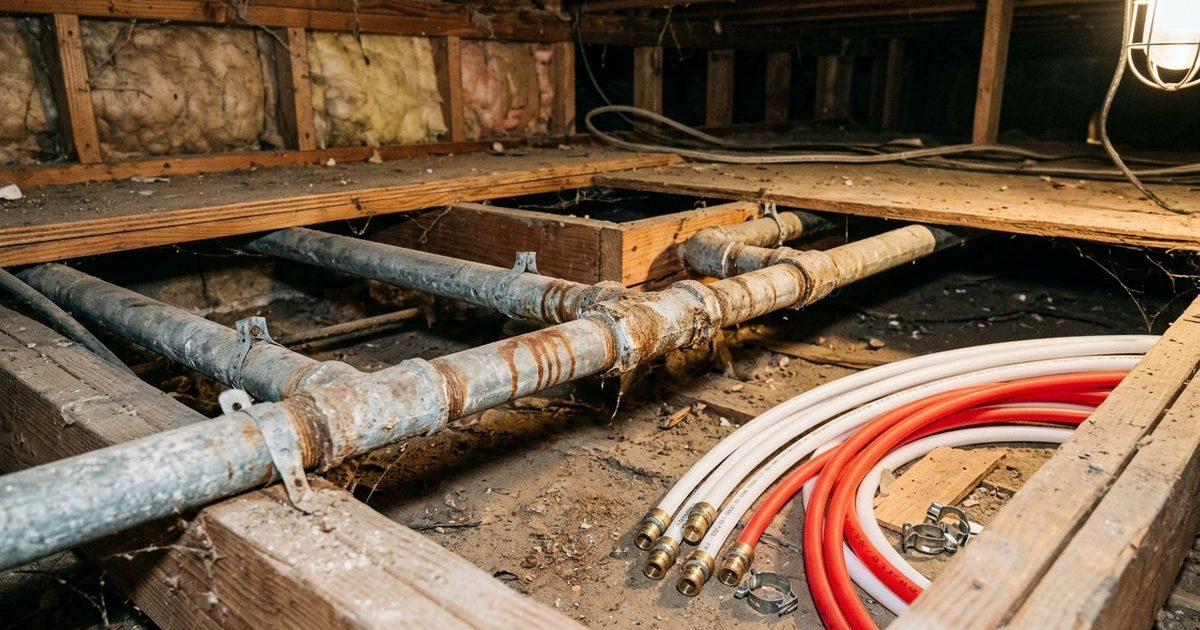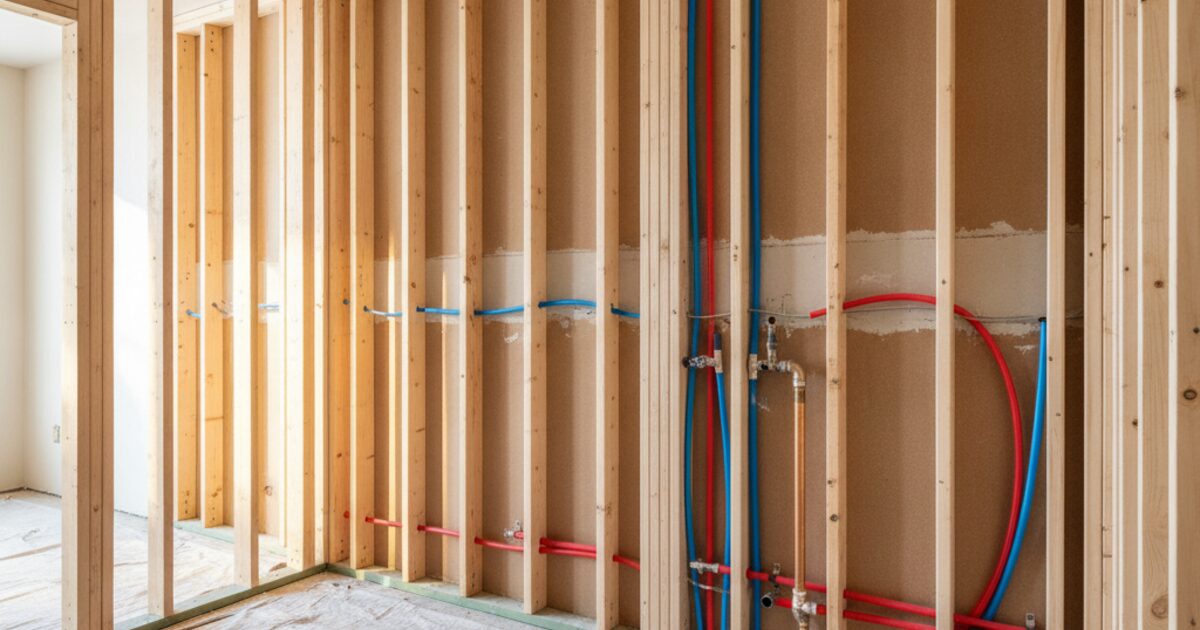

A whole-house repipe on a single-storey Santa Clarita home usually takes three to five days, including patching the walls, and a two-storey home takes five to eight. A partial repipe, such as one bathroom or one failing run, is usually done in a day or two, and in almost every case you can keep living in the house while we work.
Those numbers hold for most valley homes. What follows is what actually happens on each day, when you will be without water, how the permit fits in, and the things that make a job run longer.
The short answer, by type of job
| Job | Typical time | Notes |
|---|---|---|
| Partial repipe | 1 to 2 days | One bathroom, the main supply line or a single failing run |
| Whole house, single storey | 3 to 5 days | Including drywall patching |
| Whole house, two storey | 5 to 8 days | More wall access and longer vertical runs |
| Permit and inspection | Added to the schedule | Required for a repipe |
The pipe itself goes in faster than most people expect. The days are taken up by careful wall access, testing, the inspection and patching, which is the part you live with afterwards, so it is worth not rushing.
Before day one: the walk-through, the price and the permit
Before anything is booked, we walk the house and map the existing pipe: what it is made of, where it runs, where it can be reached from the attic or crawlspace, and where walls will need to open. That is what lets us give you a written price, rather than a guess over the phone, and a realistic schedule.
If you are still deciding on material, our PEX vs copper repipe guide covers the trade-offs. Most valley repipes are done in PEX, which bends around framing and needs fewer fittings, so less wall has to be opened.
The permit. A repipe needs a plumbing permit and an inspection. Which office issues it depends on where you live. The City of Santa Clarita lists "Repipe" among its instant online permits for residential work (City of Santa Clarita Permit Center), so inside city limits the permit is quick. Homes in unincorporated areas such as Stevenson Ranch, Castaic and Acton go through Los Angeles County Building and Safety. We file the permit and meet the inspector either way.
Day 1: protecting the house and opening access
The first morning is mostly preparation. We lay floor protection along the work paths, cover furniture in the rooms we are working in, and seal doorways with plastic sheeting where dust is likely.
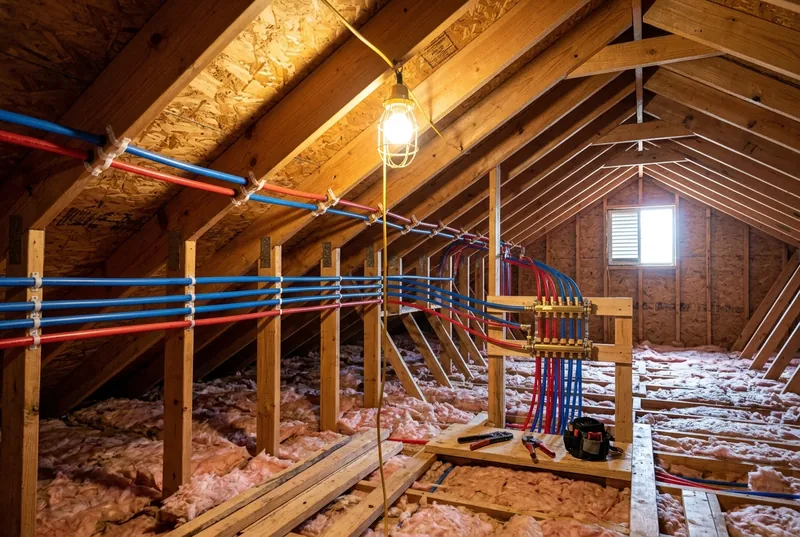
Then we open access. In most single-storey tract homes in Valencia, Saugus and Canyon Country, the new lines run through the attic and drop down inside the walls to each fixture. That means small, square openings behind sinks, toilets, showers and the water heater, not whole walls stripped back. Where there is a crawlspace, some runs go underneath instead.
Your water normally stays on through day one.
Days 2 and 3: running the new lines, in sections
This is the main work. New supply lines go in from where the water enters the house, out to each bathroom, the kitchen, the laundry, the water heater and the hose bibs.
We work in sections so you are not without water for days. A typical pattern is to build a run, then shut the water off for a few hours to tie that section in and bring it back on. We tell you each morning when the water will be off, so you can plan showers and laundry around it. Most days you have water in the evening.
New shutoff valves go in at the fixtures as we go, which is worth having in its own right. If a toilet or sink ever needs work later, you can isolate it without shutting off the whole house.
Day 3 or 4: pressure test and inspection
Once every fixture is on the new pipe, the whole system is pressure tested with the walls still open, so any problem shows up where it can be fixed easily. Then the inspector checks the work. We book that inspection and meet the inspector, and the walls stay open until it passes.
Inspection timing is the one part of the schedule we do not fully control. It is the most common reason a job runs a day longer than planned.
Days 4 and 5: patching the walls
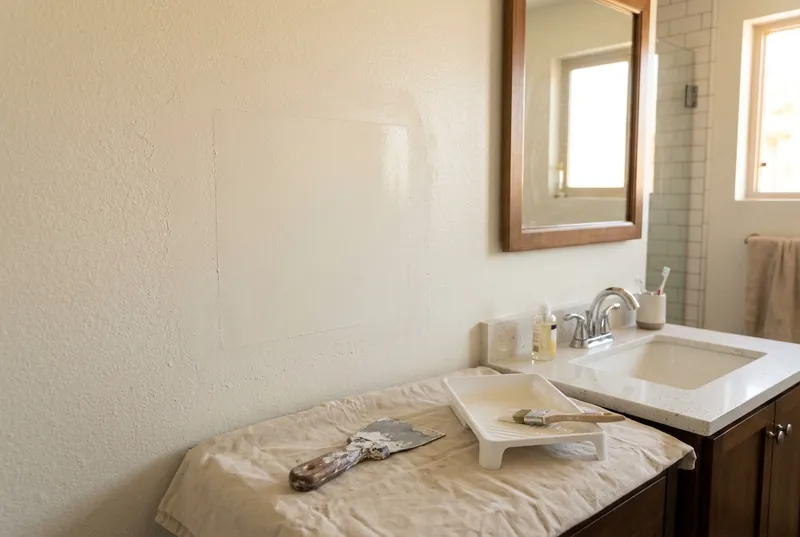
After inspection, the openings are closed with new drywall, taped, mudded and sanded. Patching takes more than one visit, because each coat of joint compound has to dry before the next. The patches are left ready for paint.
If you are already planning to repaint a room, now is a good time, because the patch areas need primer anyway.
Living at home during a repipe
Almost everyone stays in the house. A few things make the week easier:
- Clear the walls we will open. Move furniture away from bathrooms, the kitchen sink wall and the water heater. Empty the cabinets under sinks.
- Plan around the water-off windows. We tell you each morning. Keep a few jugs of water for the kitchen if the shutoff runs over lunch.
- Pets and kids. Doors will be opening and closing all day and there will be tools in rooms. Keep pets in a closed room or the yard.
- Dust. We contain it, but some still settles. Cover anything in the rooms we are working in that you would not want to wipe down.
- Parking. We need space for the van near the front of the house.
- Working from home is usually fine. Expect noise while walls are being opened, mostly on day one.
What stretches the schedule
Every house is different. These add time:
- Slab homes with no attic access over part of the house. Runs have to be routed through walls or ceilings instead. If the reason for the repipe is a leak under the slab, our slab leak repair or reroute guide explains how rerouting works.
- Two storeys. Lines to the upstairs bathrooms need vertical runs through walls or chases.
- Finished ceilings and tiled walls. More care is needed to open and close them.
- Original galvanized pipe. Older homes in Newhall and along the San Fernando Valley side often still have it, and its fittings fight back. Our galvanized pipe replacement guide covers what to expect in those homes.
- Surprises behind the wall. An old leak, damaged framing or a failing drain line. We show you and price it before doing anything extra.
After the repipe
For the first week, keep an eye on the new shutoffs and the areas around the patches. Run each tap and flush each toilet once a day for the first few days to clear any air from the lines. Water pressure in a house that had galvanized pipe is usually noticeably better straight away.
If anything looks wrong, call us. We stand behind our work and come back if something is not right.
Book a repipe with BluePoint Plumbing
If you are weighing a repipe, call BluePoint Plumbing. We walk the house, map the existing pipe and give you a written price and a day-by-day schedule before any wall is opened. We file the permit, meet the inspector and patch up after ourselves. A real person picks up, Monday to Saturday, 6 AM to 5 PM. See our repiping service in Santa Clarita or contact us to book.